Our Research
SPAC-CRADLE studies how water, carbon and energy cascade through the soil-plant-atmosphere continuum (SPAC) — and turns that understanding into tools for managing real agroecosystems.
Project objectives
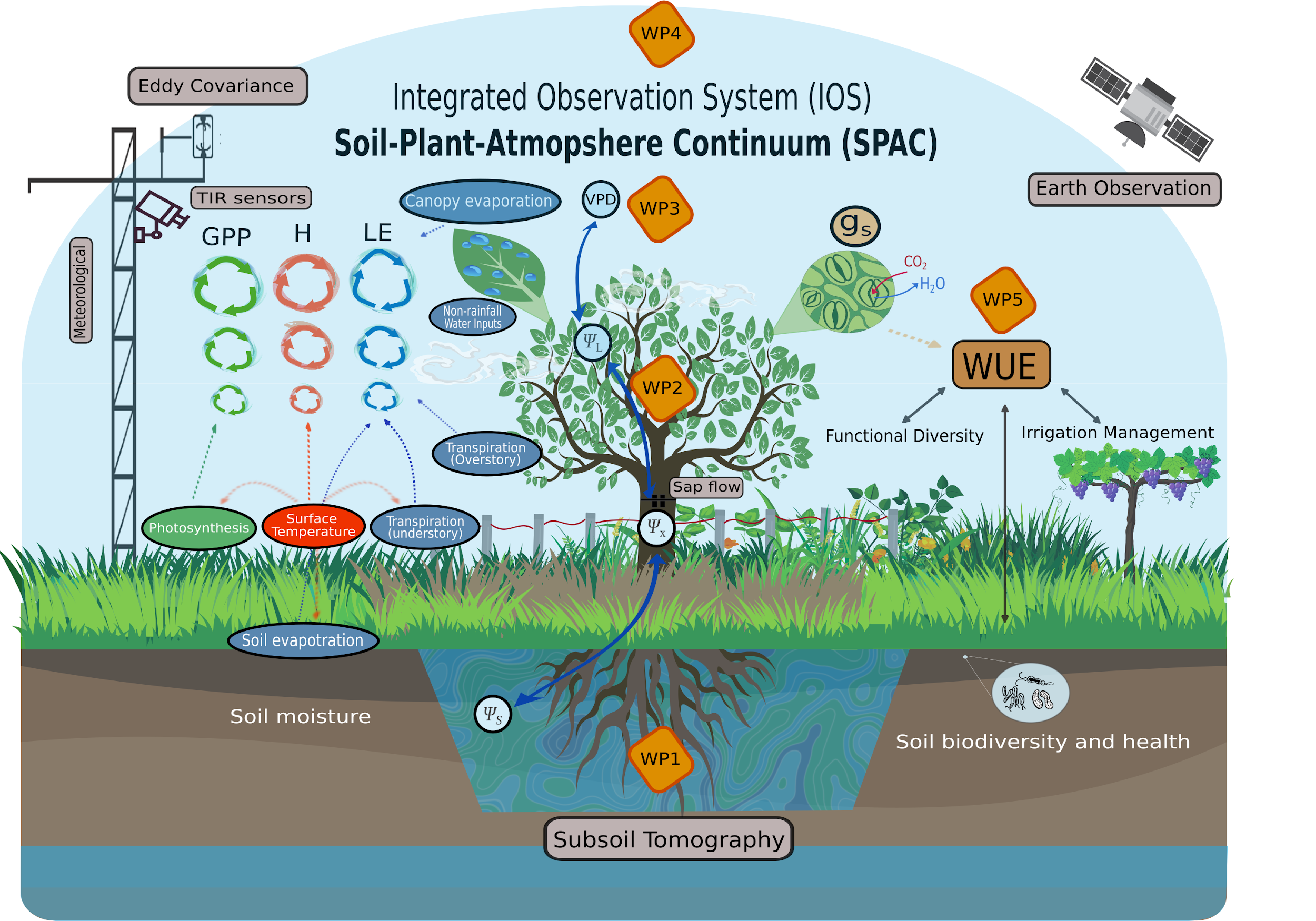
The overarching goal of SPAC-CRADLE is to advance our understanding of SPAC processes in complex agroecosystems by adopting a holistic approach that integrates subsoil processes with land–atmosphere dynamics. This integration will enable the development of more mechanistic modeling approaches and support solutions to contemporary societal challenges, including water resource management, biodiversity monitoring, and the maintenance of soil health in agronomic systems.
Main Goals
- Improve our understanding of the soil-plant-atmosphere continuum through integration of multiple observation systems across climate gradients, especially in regard to less-studied processes.
- Adapt state-of-the-art models to integrate novel data streams (e.g. continuous thermal sensors, geophysics) to better understand environmental and physiological constraints to water, carbon and energy fluxes.
- Use the integrated modeling and observation system to better understand relationships between agro-ecosystem functioning and management considerations.
- Transfer and disseminate the gained knowledge across all target audiences through a well-balanced program of academic and professional training, including demonstration and non-academic articles.
Work Packages
Soil
Subsoil geophysical imaging to map moisture and hydraulic properties beyond the reach of point sensors.
WP2Plant
Physiological measurements and remote sensing of vegetation traits and non-rainfall water inputs.
WP3Atmosphere
Micrometeorological, proximal and spaceborne observation of land–atmosphere exchange.
WP4Connecting the pieces
An integrated SPAC model linking soil, plant and atmosphere fluxes end to end.
WP5Evaluation
Applying the integrated model to water management, ecosystem function and soil health.
WP6Communication & Dissemination
Sharing project outcomes with scientists, students, farmers and the wider public.
Contents